For several years running, I made the trip to Omaha for the Berkshire Hathaway annual shareholder meeting. These are my notes from those trips, merged here from what were originally separate posts covering 2010 through 2012.
What I Learned at the Berkshire Hathaway Meeting (2010)
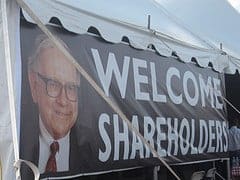
I made it to Omaha and back for the Berkshire Hathaway 2010 annual meeting. When I pulled up to the shareholder cocktail party at Borsheim’s on Friday night at 9:00pm, I knew that I was not at your typical shareholder event. The open bar and live band, with plenty of Berkshire shopping opportunities near by, helped to kick off one of the most fascinating and fun events I have ever attended. I even met Netjets CEO and Berkshire CEO hopeful David Sokol.
But I am sure you are not reading this to hear about the dancing and the drinking, you want to hear what Warren Buffet and Charlie Munger told us about the outlook of the company and the economy. The duo was very conversational and fun watch. Munger’s most memorable quote from the day was “I have nothing further to add,” which was said at least a dozen times and never failed to get a chuckle.
The day opened up with a video presentation that acted as a digital cheerleader for Berkshire companies. The presentation started with an epic video about Burlington Northern Santa Fe Railway, the most recent and largest acquisition in Berkshire Hathaway’s history. It followed with a string of commercials for Geico, Coca-Cola, and virtually every other holding. It also included an interesting preview of a cartoon intended to get young kids interested in investments. “The Secret Millionaire’s Club” featured voice work by Warren Buffet and Bill Gates. The Desperate Housewives also made a video appearance, though I was not lucky enough to see Eva Langoria in person.
From there, Warren led a question and answer session that lasted for about five and a half hours. Questions ranged from Goldman Sachs and earthquake insurance losses to international investments and succession planning.
The major highlights to me revolved around the Goldman questions, insurance losses, and the economic outlook as it applied to Berkshire Hathaway. Warren Buffet stood behind Goldman Sachs and defended all of its actions. Goldman profited from the housing market collapse, and there have been many questions about the legality and ethics surrounding those deals. Buffet said that there will always be short sellers and always people going long. Some win and some lose. In this case, Goldman made a smart decision and won very big.
I had no idea about the scale of Berkshire Hathaway’s insurance operations. Berkshire was involved in reinsurance in Chile and lost about $3 billion (if memory serves) from the recent major earthquake there. Munger said that insurance losses are a completely acceptable part of doing business as an insurance company. Buffet added that Berkshire was paid a premium to take that risk. I also like to note that Berkshire does quite well investing those premiums prior to losses. Either way, both Buffet and Munger agreed that even in the event of a catastrophic earthquake in California or a major securities insurance loss, the company would remain profitable and viable.
In all, the event was great for company spirit and enjoyable for investors like me. I even made it to the post meeting Tweet-up and met some interesting and fun people. I also felt confident that my investment in Berkshire Hathaway is secure and in good hands. As another blogger recently put it, BRK stock is one of the best diversified mutual funds you can buy.
Keep your eyes open for pictures from the event sometime soon. I hope to get those loaded up and posted over the weekend. Also, thanks to my good friend @JRideout for attending the entire weekend, complete with eight hour drive each way, with me.
P.S. Warren said we should all drink more Coke and eat more See’s Candy. For the sake of my shares, I suggest you do your part.
Berkshire Hathaway Dividend Policy (2011)
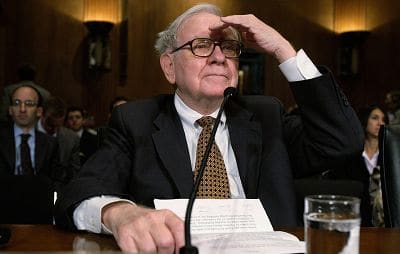
This year, I made my second annual pilgrimage to Omaha to see Warren Buffet and Charlie Munger discuss the future of Berkshire Hathaway. This week is Berkshire Hathaway Week at Narrow Bridge Finance. I will discuss a major topic from the meeting each day for the rest of the week.
As a shareholder, I am interested to see how the company is being managed as I would like my investment to increase in value. As a lifetime learner, I am fascinated to see how the third richest man in the world amassed such a large fortune and led his company to growth that consistently beat the index and created many millionaires.
History
One question Warren Buffet and Charlie Munger answered related to Berkshire Hathaway’s dividend policy. The company has never paid a dividend and, until the recent purchase of Burlington Northern Santa Fe Railway, had never split. The stock has just increased in value every single year, except for two, since the company’s inception.
Buffet said that he feels strongly about the company’s dividend policy. Every year, the company’s managers work hard to allocate capital to projects that will return more than one dollar in book value per share for each dollar invested.
This is a fantastic concept and the core of Warren Buffet’s, and his well known teacher Benjamin Graham’s, investment strategy.
Value investing is designed to find an investment opportunity, find the intrinsic value of the company inclusive of growth prospects, and compare the intrinsic value to the price of an investment. If the company is undervalued, you invest. If it is overvalued, you don’t.
Present
Buffet said that the company continues to find investment opportunities that create a great return for shareholders. The recent high profile purchases of Burlington Northern Santa Fe Railway and Lubrizol are proof of the continued drive to increase value. The BNSF takeover has outperformed expectations and has created a major cash stream for the company.
A less understood, but incredibly large, portion of the company is invested in insurance. General RE and other segments require a strong capital structure to produce historically high returns, but must be liquid in case the cash is needed, as was the case with the recent Christchurch, New Zealand and Japanese earthquakes.
Over time, however, the portfolio companies generate cash that has to be used for something. It will either be used to invest or must be returned to the shareholders.
Future
Buffet said that the stream of large investment opportunities will not last forever. Some companies are too big to incorporate and others are too small to be worthwhile for such a large company. The sweet spot in the middle is difficult to come by, and the number of opportunities is decreasing.
With that in mind, Buffet said that Berkshire Hathaway would inevitably have to pay a dividend some day. If the company cannot find an investment worth more than a dollar, it is better to return the dollar to the shareholders.
He hopes that day is far away, but it will come some day. He expects that the stock will drop when that day comes, as it is an admission by the managers that they can no longer perform to the levels of the past.
My Take on It
Buffet had a sad tone in his voice when he admitted that opportunities would inevitably dry up, but I have faith that there is a long enough runway that we will not see this situation come up in the near future.
Photo by mitbbs2008
Berkshire Hathaway Future Leadership (2011)
Yesterday we talked about Berkshire Hathaway’s dividend policy, which is a forward looking discussion of Berkshire’s ability to generate a strong return. None of that will be possible, however, unless Berkshire Hathaway has strong leaders.
Past
Berkshire Hathaway was built almost single handedly by Warren Buffet starting in the 1960s. When he returned to Omaha from school in New York, he managed the investments of his friends and family and used the capital dollars to build the company we have all come to know today.
Over time, his company grew and he added other staff, most notably Charlie Munger. The company now employs about twenty people in its main office on Farnahm Street in Omaha, Nebraska.
Present
Warren Buffet is 80 years old. Charlie Munger is 87. These two brilliant men have led Berkshire Hathaway’s investment and acquisition portfolio to create unrivaled returns and value for long time investors.
They are old. They will not live forever.
It was long presumed that the next CEO of Berkshire Hathaway would be David Sokol, a Berkshire Hathaway manager that joined during the MidAmerican Energy Holdings acquisition. He was then put in charge of the turnaround of NetJets, another Berkshire company.
Sokol’s name hit the headlines in March, 2011 for his involvement in what appears to be an insider trade involving the acquisition of Lubrizol. He has since resigned from his position at Berkshire Hathaway and is under investigation by the SEC.
Warren Buffet is the Chairman and CEO of Berkshire, but those are big shoes to fill. At the annual meeting on Saturday, Buffet announced that the roles of Chairman and CEO would be split.
Future
The next Chairman of Berkshire Hathaway will be Howard Buffet, Warren’s oldest son. Howard has been involved in the business for some time and is currently a Director for Berkshire Hathaway and Coca Cola. His past business experience and lifetime dedication to the company make him a prime candidate to succeed his father as Chairman. However, he does not have the operational knowledge and experience, in my opinion, to take over the CEO role as well. Warren agrees.
No one knows who will be next in line to helm one of the largest companies in the world. I imagine the current CEO of BNSF Railway, Matthew Rose, has a good shot. It is hard to know for sure today, which does leave some room for speculation.
Your Thoughts?
Who do you think is next in line at Berkshire to be the CEO? Do you think Howard Buffet is a good choice for Chairman? Please share your thoughts in the comments.
Disclosure: I own shares of Berkshire Hathaway in my active and retirement portfolios.
Berkshire and a Green Future: A Shareholder Proposal (2011)
So far, we have discussed Berkshire’s dividend policy and future leadership. Today, we are going to focus on a particular shareholder proposal that led to the most contentious moments of the day.
The proposal that started the debate:
Emily S. Coward, 2020 Pershing Street, Durham, NC 27705, owns 62 shares of Class A Common Stock and has given notice that a representative of hers intends to present for action at the meeting the following proposal.
Resolved that Berkshire – in response to strict new EPA regulations – establish quantitative goals for the reduction of greenhouse gas and other air emissions at its energy-generating holdings; and that Berkshire publish a report to shareholders by September 30, 2011 (at reasonable cost and omitting proprietary information) on how it will achieve these goals – including plans to retrofit or retire existing coal-burning plants at Berkshire-held companies.
This is an incredibly complex proposal for a company like Berkshire Hathaway and requires a lot of background knowledge, scientific understanding, and business acumen to fully understand. I will try to give you the executive summary version here.
Greenhouse Gasses and the Environment
The scientific evidence that greenhouse gas emissions, such as those from burning fossil fuels like oil, natural gas, and coal, are having a massive impact on our atmosphere, ecosystem, and planet. If you think this is fabricated or not proven, you are either stupid, ignorant, or trust Rush Limbaugh over science. The evidence is clear.
We can debate all day about how much of an impact we are having and whether we need to take actions to avoid our impact. That is subjective. But we are having an impact.
My personal opinion is very strong and clear. We need to, as a global society, do all we can to eliminate greenhouse gas emissions from fossil fuels. However, even if the United States never put out another ounce of carbon into the atmosphere, the impact from China’s coal power plants alone has the potential to impact our planet’s temperature and ecosystems.
The Polar ice caps are shrinking. Ships have used the northern passage for cargo transportation. That would have been impossible just a few decades ago. I have seen the dead coral reefs in the Caribbean with my own eyes.
I have lots of ideas on how to fix this issue, but none are immediate and all are expensive.
Berkshire Hathaway Impact
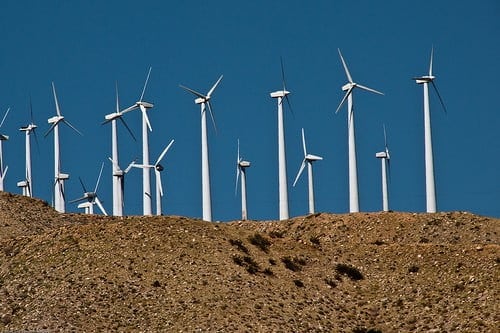
Berkshire Hathaway owns several energy focused companies. The largest and best known is MidAmerican Energy. As of a recent initiative in Iowa, MidAmerican is the number one wind electricity generator in the United States. In addition, Buffet is a nuclear energy advocate.
These are two major steps in securing our energy independence in a way that does not destroy the planet. Despite what you may have heard, nuclear is the safest and cleanest energy to meet base load needs. Wind, in combination with solar and hydro, can meet our peak demand needs.
Based on their current track record, I trust that Berkshire Hathaway managers are on the right track for a move to profitable, clean energy forms.
My Take on the Vote
There were passionate speakers both for and against the shareholder resolution. While more people spoke for it, it seemed that the crowd was against it. From my position, it appears that most Berkshire investors either don’t care about the environment or don’t understand it. I am always shocked to hear people say that global warming is not real. It certainly is, and it is not “hot air” as one commenter stated.
However, as an investor and a finance minded person, I am in the camp with Milton Friedman. The purpose of a business is to make money. Warren Buffet and the Berkshire board agree.
I do support moving toward cleaner energy. I am a huge nuclear advocate. However, a shareholder meeting is not the forum to change the world. It is a forum to increase profits.
The Result
The resolution failed, as I expected it would. However, I hope Berkshire and other energy companies continue on the path toward more renewable, sustainable energy that will not destroy our planet.
Do you think this was the right thing to do? Is it the responsibility of big business to protect the environment pro-actively?
Dreams Inspired by Berkshire: Fortune and NetJets (2011)
To top off Berkshire Hathaway week at Narrow Bridge, I want to talk about the inspiration and enthusiasm from participating in the “Woodstock for Capitalists” in Omaha. Now that we have discussed dividends, leadership, and environmental policies, it is time to focus on something a bit more fun.
Fortune
Sitting in the room with Warren Buffet, Bill Gates, Charlie Munger, the entire Berkshire board of directors, and countless millionaires, I turned to my friend and asked, “Do you think there is a higher net worth in this room than anywhere else on the planet right now?”
I have put a ton of time into my financial education. I have spent countless hours studying and analyzing investment opportunities, stocks, bonds, returns, interest rates, investor psychology, and a plethora of other finance concepts.
Going to the Berkshire meeting is evidence that what I am doing can work quite well. If you work hard, make smart investments, and stick to your principles, you can get rich. It really does work.
NetJets
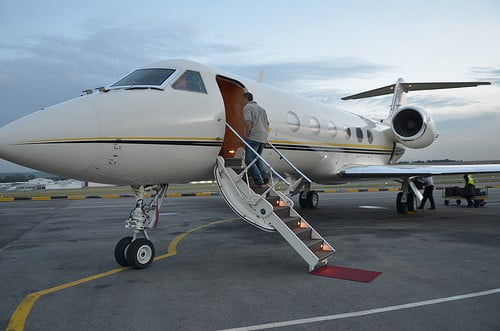
We took a couple of hours to head out to the Omaha airport to tour the NetJets exhibit. When I get so ridiculously rich that money is not an object, there will be only one way to travel.
I had never been inside of a corporate jet before, and I was able to tour a Cessna Citation and Gulfstream 450. It was really “like a G6.” Wow. That was like walking straight into luxury.
Dreams
We can all dream of great things, but only some of us will actually get there. I intend to be one of those people.
The difference between the perpetual dreamers and those that reach their goals is planning and action. I know some people with a great retirement plan: “win the lotto.” My retirement plan is to work hard and aggressively save so I can retire early.
Some people wait around for their million dollar idea. I have tried a few. One in ten entrepreneurs succeeds, so as far as I am concerned it is a numbers game. Take action and keep trying, while learning from your past, and you can do anything.
I saw a $7.5 million ring at Borsheim’s. I plan to never spend to that level of excess, but it would be great to have the ability to buy that for future Mrs. Eric. I saw a long line of private jets at the airport terminal. I want to be able to do that someday (sooner than the $7.5 million ring.)
I want to be able to live my dreams, and the Berkshire weekend is proof that I can do it. I will. Just keep watching.
Photo by Afrika Expeditionary Force.
Berkshire Hathaway 2012 Shareholder Meeting
“If you buy a business for less than it’s worth, you’re going to make money.” –Warren Buffet
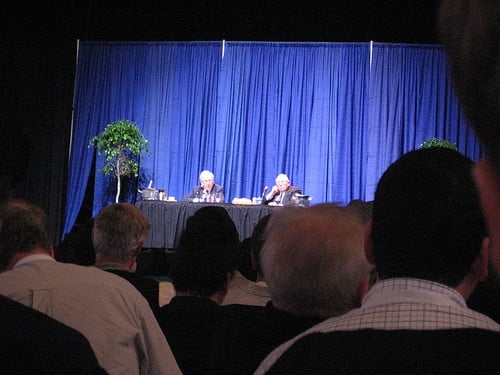
This year, I made my third trip to Omaha for the annual Berkshire Hathaway shareholder’s meeting. Warren Buffet are Charlie Munger took center stage and shared their wisdom on investing, business management, and the economy to a packed house that included billionaire Bill Gates and rock superstar Bono.
While I will drip some of the wisdom into many posts for months to come, here are some top gems that made me think, laugh, or learn from the Oracle from Omaha.
“We’re not going to have an arts major in charge of Berkshire”
Holding to my mantra that you should choose your major based on a career goal rather that something fun for the moment, Warren made it clear that you should have a serious business background if you want to run a business.
In 2008, I wrote that you should major in getting a job. I followed in in 2011 suggesting that a solid education is the cornerstone of fixing your personal economy. I am glad to see that Mr. Buffet is on the same page.
US electricity usage decreased 4.7% in 2011
While discussing the future of MidAmerican Energy, Warren shared this interesting fact with us. It shows that US conservation efforts are working and that we are making steps toward a brighter, greener future. MidAmerican is invested in both solar and wind energy, and decreasing overall usage makes environmentally friendly energy sources a more important part of our energy economy.
“A 16 year old male is more likely than me to have an accident. I drive 3,500 miles per year and don’t try to impress a girl while doing it.”
While discussing risk and underwriting tactics at GEICO, Warren left the audience laughing with this great quote. It is amazing how Warren and Charlie can take a complex issue like the insurance quoting business and simplify it in practical terms that apply to risk and profit.
He also discussed risks with the insurance and re-insurance businesses and told us that one of the biggest part of any CEOs job is to be the Chief Risk Officer.
“The 84 year old man who makes investment decisions based on politics should buy Fox.”
An audience member shared that his 84 year old father would not buy Berkshire Hathaway stock because of Warren’s public political opinions. This witty reply goes right to the core of value investing and the theme of the day. Investment decisions should not be made based on personal beliefs, politics, or emotion. You should buy based on the ability to earn a healthy return.
“I’m not interested in buying and selling businesses. I’m buying for keeps.”
One of the guiding principles I use in my personal portfolio decisions is to buy for the long run. Volatility will always be there. The economy and markets will always ebb and flow. But if you buy a stock with a short term gain in mind, you will not perform as well in the long run.
Buying solid companies with a bright long term horizon is a fundamental to value investing. I avoid looking at my portfolio daily for this reason. I don’t care what my stocks do on Wednesday; I care what they do over the next 520 or so Wednesdays and beyond.
“Everyone wants fiscal virtue, but not quite yet.” –Charlie Munger
While discussing our obnoxious political situation in Washington regarding our taxation and national debt, Charlie, a known conservative, said something that makes way too much sense. He said that both Democrats and Republicans know that we need to raise taxes and lower spending, but no one is ready to do it today.
We want fiscal virtue, and smart people on both sides want to get there, but no one is willing to look weak or take any political risk getting there. That is, to me, one of the biggest single problems the United States is facing going forward.
“I’ve got nothing further to add.” –Charlie Munger
That’s a great way to put it. I wish more companies and investors could see things this way. Investors panic if a dividend is cut, eliminated, or never put in place, punishing the company with a lower price, but maybe the cash could be used in a way to later improve the share price to a greater degree. I’d never thought about it that way. Looking forward to more thoughts and observations!
There is reason to be concerned if a dividend is cut once it is declared, but in the long run growth should come first. You can always sell shares if you need cash flow (or just pick other stocks).
Be sure to stick around the rest of the week for more Buffet-isms.
Can I just say I LOVE Warren Buffet. 🙂
Can I just say that I agree! I went all the way to Omaha to see the Oracle in person two years in a row. He is someone I look up to in the investing and business world.
I have always wanted to attend th Berkshire carnival in Omaha. It’s ironic, but I just graduated fron the University of Nebraska – Lincoln and still have never stepped foot in the Nibraska. Online education has allowed me to be completely removed from any physical connection. Can I really call myself a Husker if I have not attended a football game? Thanks Eric.
As a proud Colorado Buffalo, I think more highly of you for never having been to a Huskers game 🙂
I’ve been a stockholder for years in BH. Is the meeting worth the trouble to get there?
It is certainly worth going at least once. The experience and wisdom are the best business education you can get in a day anywhere in the world.
Gotta love the 84 year old curmudgeons. I’m sure if Buffett came knocking at his door he’d change his tune.
I wouldn’t call Warren and Charlie ill tempered or cantankerous in the least bit. They did not agree 100% on everything by any means, but they did both put forward a positive message on each topic they covered with a goal of a positive solution. They did not simply complain about anything.
“US electricity usage decreased 4.7% in 2011.” Oh my gosh, that is good news.
I know. This country might finally have an environmental trend going the right way!
It’s great that you were able to go, I can’t wait to see what else you’ll share from the experience.
It is only an 8 hour drive from Denver, so getting to Omaha is easy and a fun getaway
I’m a bit jealous! From what I’ve read, it was informative as usual. Surprising by the electricity dip, how much of that had to do with the mild summer and winter, not conservation.
Good point on the climate influence. I hadn’t thought about that.
With this post, I remember one of the principles of success that Napoleon Hill is promoting- to be around with successful people. That means to associate oneself with positive individuals and have a strong support system.
To be around with Warren and Charlie is truly a blessing.
Best regards,
Belinda